- Home
- Learn Japanese Blog
Learn Japanese Blog
Stay in touch with what's new at Learn-Japanese-Adventure.com.
This Learn Japanese blog...
- lets you know whenever a new page or addition appears on
Learn-Japanese-Adventure.com
- alerts you on any updates on existing pages
- keeps you up-to-date on new Japanese lesson and word lists.
To subscribe to this Learn Japanese blog (no e-mail address necessary), hover your mouse over the little orange RSS feed button (just besides the subject line "Recent Articles"), and then RIGHT-click on the RSS feed bar, copy-and-paste the URL of this site's RSS feed into your RSS reader.
If you have an account with Feedly or My Yahoo!, just click the respective buttons and follow their instructions.
If you are not sure what RSS and blogging is all about, click here... What's an RSS Feed?
Once you start, you will be amazed at what RSS can do.
Recent Articles


-
Why is Mushroom written with Katakana and not Hiragana in some cases?
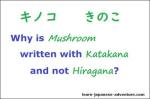 I was on the internet looking for the meaning of Kinoko and it turns out it means mushroom and so I've been using 「きのこ」. On the Wikipedia page, however,
 -
Japanese Stationery Words and Vocabulary
 Learn why Japanese stationery is so popular around the world
 -
Japanese Transport Words and Vocabulary
 What are the various modes of Japanese transport (norimono) you can find in Japan
 -
Can you explain more about the several uses of the verb shimau?
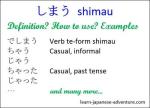 Reply: Hi Pinillos Elka, I have previously answered a similar question on how to use Verb te-form shimaimashita. Over here, I will answer it in more
 -
What are sokuon and long vowels?
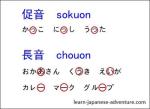 Can you explain sokuon and long vowels (chouon) in a kind of different way? They confused me and I don't know what they mean. Reply: Hi Briam, 促音 (sokuon)
 -
what are the particles in japanese and how to use the particles?
 Reply: Hi Shiela, This is a question which I don't think can be replied completely and clearly in a single page. However, I will try to give you a general
 -
Japanese Drink Words and Vocabulary
 Over here you can see all those words used for Japanese drink. Check out what are the common drinks in Japan.
 -
Japanese Trains & Stations Words and Vocabulary
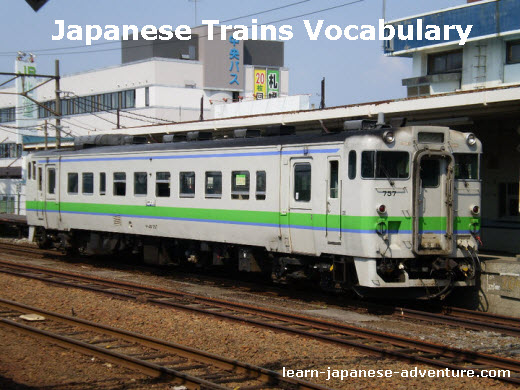 Japanese trains and stations are quite different from other countries. Study this vocabulary list to see what words are used to describe them.
 -
Japanese Vegetables Words and Vocabulary
 Study the commonly used Japanese vegetables words and vocabulary and learn how to pronounce them correctly.
 -
Japanese Learning Software Review - Rocket Japanese 2021 Edition
 A review of Japanese learning software - how Rocket Japanese makes it easy to learn to speak perfect Japanese, anytime, anywhere.
 -
How to determine onyomi and kunyomi of each kanji character?
 Dear sir, I have great difficulty in determining onyomi and kunyomi of each and every kanji. The only thing was to memorize them but it takes too long
 -
Shinjuku, Tokyo, Japan - Genki Japanese and Culture School
 Genki Japanese and Culture School (GenkiJACS) is a revolutionary Japanese language school that teaches communicational Japanese for everyday life and work,
 -
Chiyoda, Tokyo, Japan - Coto Japanese Academy
 At Coto Japanese Academy, it is our mission to help international residents in Japan learn the Japanese that they need for everyday life. We take pride
 -
Los Angeles, California, USA - Strommen
 Meet Your Japanese Teacher and Start Speaking! Strommen offers private 1-on-1 language classes for the cost of a group class. Our amazing Japanese teachers
 -
What is the difference between kimochi, kibun and choushi?
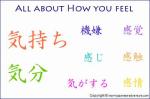 I saw you use 調子 in the sentence 体の調子が悪いとき、医者へ行きます to mean When I am not feeling well, I visit the doctor. By that I'm guessing that 調子 means feeling,
 -
Is there a test i can take just to see what level i am at?
 I don't really know where I'm at right now, but I'm guessing it's between advanced beginner or beginner intermediate. But I would like to know for sure.
 -
Is there a difference in politeness and meaning between kekkou and ii?
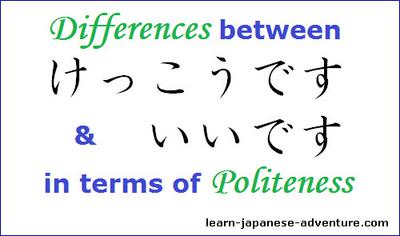 I was at a Japanese book store and the store clerk was helping me look for the book for a while. I felt bad and told her けっこう, as in she didn't have to
 -
Japanese Study Time Table
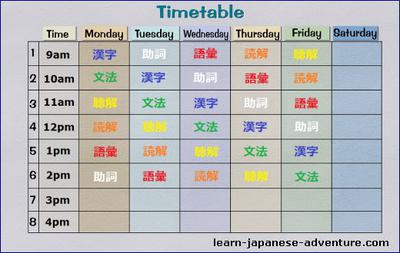 Hi, How to plan a good study time table ? How many hour of study per day or week ? Thank you. Reply: Hi JE, while it's good to have a study time table
 -
Differences between verb te form kara and verb tara sentence
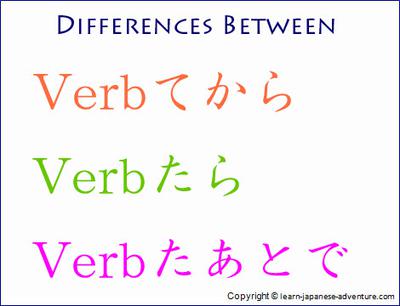 V1 て-form から、V2 (After) vs V1 た-form ら、 V2 (After) A. 家へ帰ったら、すぐシャワーを浴びる。 I will take a shower soon after I return home. B. 国へ帰ってから、父の会社で働く。 I will work
 -
How do I use negative imperative in plain form?
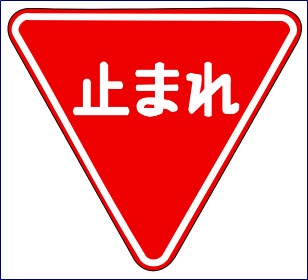 The polite imperative-form is te-form + kudasai and the negative is te-form + dekudasai. But when I want to say Do that! or Don't do that! I would prefer
Ready Set Speak Sale! Get up 40% OFF Forever Discount on Premium or Premium PLUS plan! Ends on 19 April 2024
The link above is an affiliate link, which means that I would earn a commission (at no extra cost to you) if you do end up purchasing the related learning course.
Buy me a coffee
Like This Page?




Learn Japanese Free at JapanesePod101.com

Home | About Me | Contact Me | Resources | Site Policies
Copyright © 2010– by Kia Leng Koh, Learn-Japanese-Adventure.com. All Rights Reserved.
This Website is Powered by SBI!
Facebook Comments
Don’t see the comments box? Log in to your Facebook account, give Facebook consent, then return to this page and refresh it.